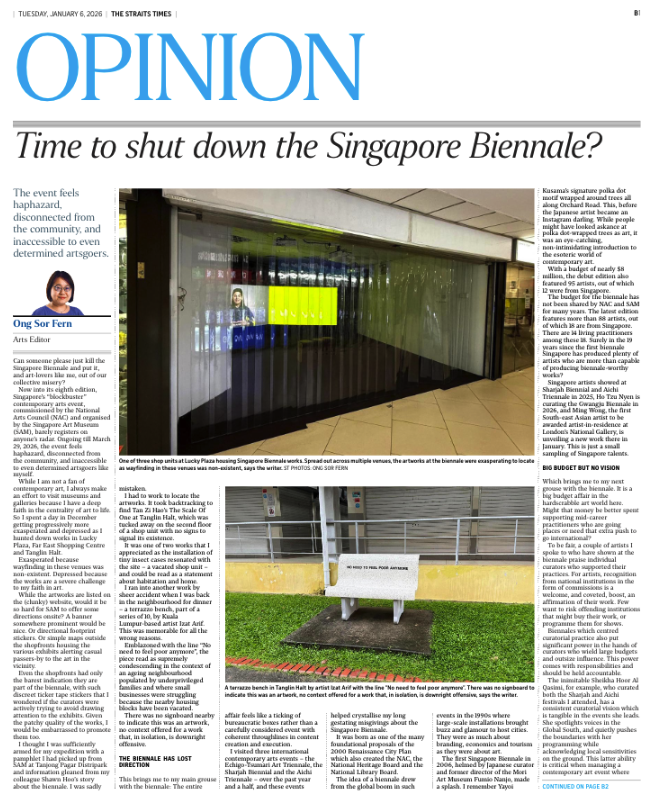
Singapore Biennale deserves structural support.
A biennale is more than a periodic exhibition. It shapes how a nation articulates ideas, participates in regional and international artistic discourse, and builds confidence in its public voice. In a city state such as Singapore, it also contributes to how civic identity is represented in the public sphere.
Open Letter to the Singapore President
In the arts, although great managers may be construed as capable leaders, they rarely equate to an expansive vision in its governance.
The Substation is not a petrol station.
The Substation was founded by theatre doyen Kuo Pao Kun, whose visionary leadership gave it the pride of place as a ‘home for the arts’ and the first truly independent multi-disciplinary arts center in Singapore. This was in 1990, one year before the establishment of the NAC i.e. before structured state funding for the arts came into being.
UnUndead it. Singapore visual arts 2020, a take.
The circumstances that have placed our scene where it is right now (if we, indeed, still have one) did not just reveal themselves overnight. Over the years, we have witnessed how various well-meaning mega visual arts initiatives and investments quietly dissipated, went to waste or were squandered.
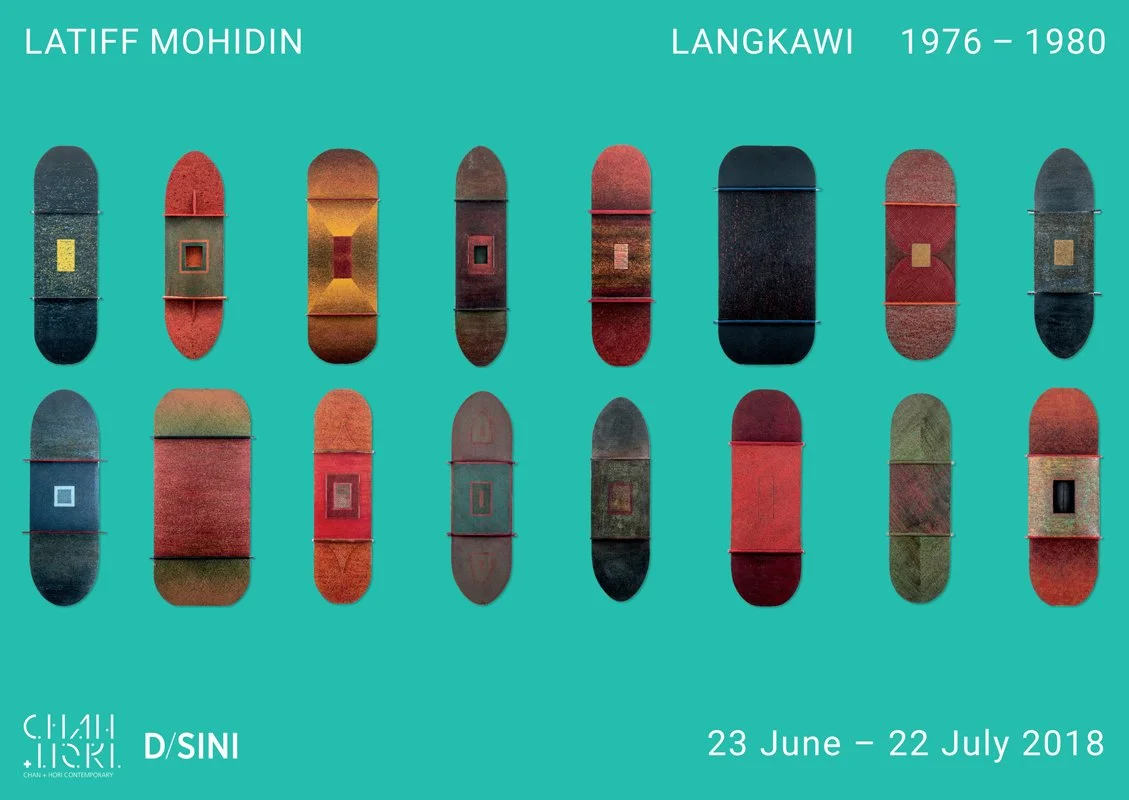
Langkawi through Latiff
In 1974, two years before starting work on Langkawi, Latiff co-founded and was active within the remarkably consequential Anak Alam artist collective. Anak Alam, loosely translated as Child of Nature, was a revolutionary, avant-garde collective of visual artists, poets, writers, dramatists and other creatives seeking alternative ideas in an environment laden with politicised, fiery debates on ‘national culture’ amidst a decade of post-independent sentiments. Prior to this, the National Culture Congress meeting in 1971 had resolved to use Malay culture and Islam amongst key pivot points in drafting Malaysia’s existent National Culture Policy.